
Local search is not just about ranking high on Google; it is about being visible where customers are already searching, understanding how they search, and converting that visibility into calls, visits, and sales. Many Vancouver, WA businesses assume that simply having a website or claiming a Google Business Profile is enough. The truth is that search behavior has changed, and users now expect fast, relevant, local results that show hours, reviews, directions, and offers. This article will explain why most businesses fail at local search, where real traffic comes from, mistakes to avoid, proven frameworks to follow, and clear steps Vancouver companies can take in 2026 to dominate local visibility and leads.
TLDR / Key Takeaways
- Local search success in 2026 requires a coordinated presence on Google Business Profile, Maps, Reviews, On-Page SEO, and localized content.
- Mobile and “near me” searches make up most local queries, according to data on how people find local businesses from Search Engine Journal.
- Online reviews influence both user trust and ranking; businesses with average ratings of 4.5 or higher see better engagement according to BrightLocal.
- Technical SEO elements such as page speed and structured data improve organic placement and visibility as outlined by Google Search Central.
- Paid search and ads can amplify visibility quickly, but without a strong organic foundation, they do not build lasting trust.
- Tracking real conversions, including phone calls, website forms, and directions requests, enables ROI measurement and informs next optimization steps.
- Content must be locally relevant with targeted neighborhood pages, services by ZIP code, and localized FAQs to match actual user searches.
The Real Problem Most Vancouver, WA Businesses Do Not See
Many business owners believe that simply listing their business on Google is enough. They focus on general SEO tactics, such as backlinks and broad keywords, without considering what actual customers search for. Users do not type the brand name; they type phrases that describe what they need and where they need it. Queries such as “best plumber near Vancouver WA”, “emergency electrician open now 98660”, or “painters in Vancouver WA with great reviews” reflect location plus service, time, and availability, and trust signals.
Business owners often assume that ranking number one for their business name will automatically bring more customers. In reality, most customers do not know a business by name before they need it. They search by need and location. For example, a homeowner with a burst pipe will search “plumber open now near me,” not the specific business name. Unless your local SEO captures need-based phrases, your business will not appear at the moment of intent.
Where Local Search Results Actually Come From
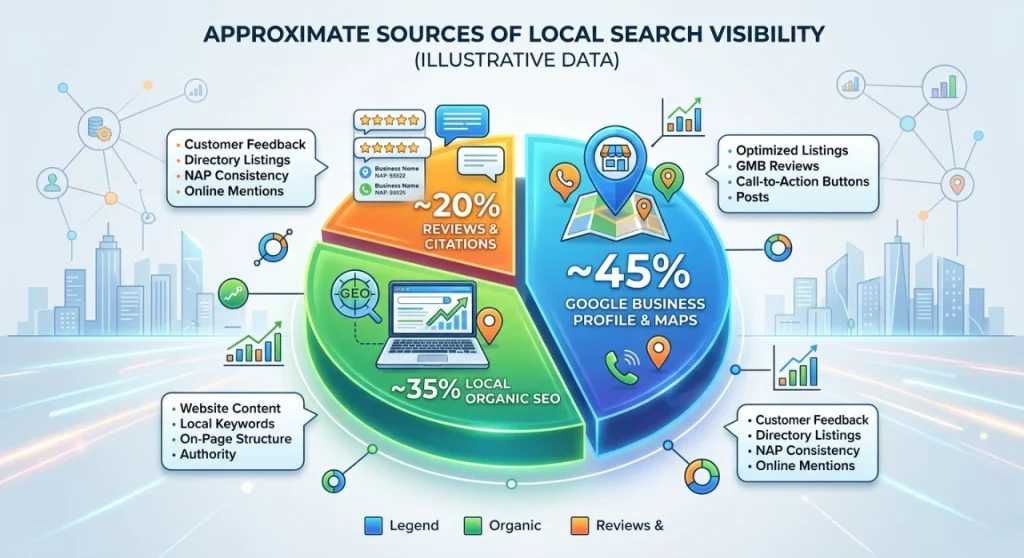
Most visibility for local businesses is shaped by three main sources of traffic and signals.
Google Business Profile and Maps
This drives a large portion of local search visibility. According to Google Business Profile Help, a fully optimized profile with accurate hours, services, photos, and categories increases visibility in Maps and the local pack. Reviews, photos, and frequent updates are key signals.
Localized Organic Search
This originates from website pages optimized for local terms, including city, neighborhoods, and service combinations. On-page content, mobile speed, and structured data help search engines understand and rank these pages. Structured data or schema, such as Schema.org LocalBusiness markup, helps search engines and is recommended for local businesses.
Reviews and Reputation Signals
Review signals from Google, Yelp, Facebook, and industry directories influence both ranking and user trust. High ratings and recent reviews correlate with higher click-through and conversion rates according to BrightLocal.
Top Reasons Vancouver Businesses Struggle to Get Local Search Traffic
- Incomplete or Incorrect Google Business Profiles
Many listings are missing photos, business hours, correct categories, or services offered. A quarterly audit of the profile with attention to every field helps search engines and users understand what the business offers. - Limited Localized Website Content
Generic service pages that do not include city-specific phrases or neighborhood terms perform poorly. A dentist should have pages titled “Emergency Dentist in Salmon Creek” and “Routine Cleanings in Hazel Dell” reflecting how users search. - Poor or Sparse Online Reviews
Few recent reviews or not responding to reviews reduces credibility and ranking signals. Automating review requests after service via email or SMS increases feedback volume and relevance. - Not Tracking Conversions Properly
Many businesses only look at traffic and not actual leads. Tracking phone calls, form submissions, and direction requests with tools such as Google Analytics goals and call tracking platforms provides actionable data. - Ignoring Mobile User Experience
Local searches are predominantly mobile. Slow pages or poor mobile layouts reduce engagement and rankings. Improving page load times and click-to-call features improves visibility and interaction. - Under-utilizing Local Directories and Citations
Missing from relevant local and industry directories hurts the consistency of Name Address Phone (NAP) across the web. Ensuring consistent listings across sources helps search engines trust the business information. - Relying Solely on Paid Ads
Ads bring visibility but do not build organic trust and ranking equity. Pairing ads with strong local SEO strategies ensures both short-term visibility and long-term authority.
What Successful Vancouver Businesses Are Doing Differently
| Struggling Businesses | Successful Businesses |
| Incomplete GBP | Fully optimized GBP with complete fields, photos, posts |
| Generic service pages | Localized neighborhood pages with targeted intent |
| Few reviews | Active review generation and response strategy |
| No tracking | Call tracking and analytics dashboards |
| Desktop-focused design | Mobile-first design with fast load times |
| Paid ads only | Integrated organic and paid strategy |
| Reactive SEO | Proactive content and conversion planning |
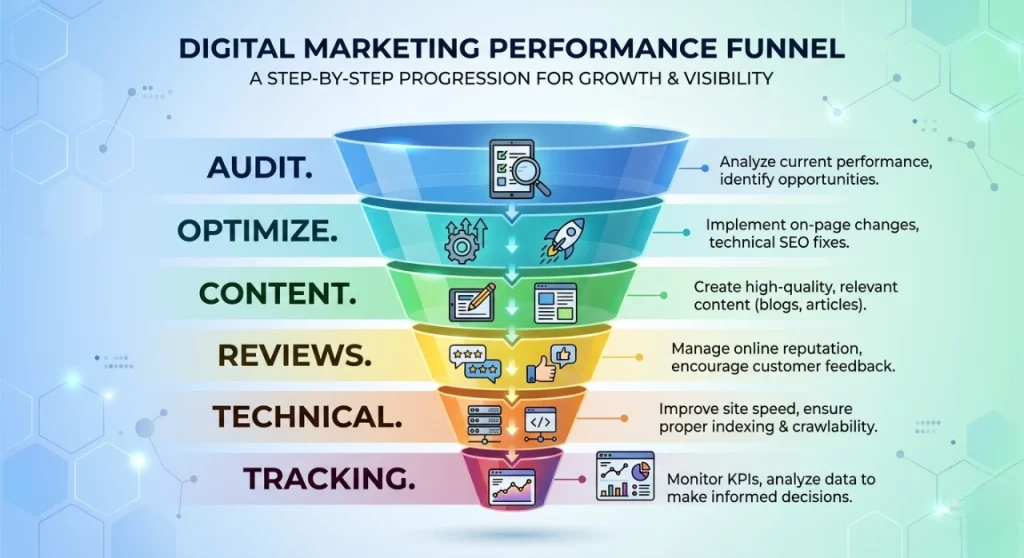
Step-by-Step Framework to Dominate Local Search
- Audit Current Presence
Audit the Google Business Profile accuracy, website SEO, and reviews and citations. - Optimize Google Business Profile
Add services, current photos, update posts, answer questions, and ensure correct categories. - Build Localized Content
Create pages that target the city plus service, neighborhood, or micro-location pages, and address local FAQs. - Increase Reviews
Request reviews after service, respond to every review, and address negative feedback offline. - Technical SEO
Add structured data for local businesses, improve mobile speed, and secure the site with HTTPS. - Track and Refine
Implement call tracking, direction request tracking, and form submission tracking to measure real ROI.
Comparison: Short-Term vs Long-Term Strategies
Short-Term Paid Ads
Paid search can bring fast visibility, but it stops when the budget stops. It is effective for capturing queries with high purchase intent.
Long-Term SEO and Local Search
Long-term local SEO builds sustainable rankings and organic leads that compound over time. Organic visibility builds user trust and reduces dependency on paid budget, according to Moz Local Search Insights.
Balanced Approach: Use paid ads to capture urgent top-funnel queries while building long-term SEO value for ongoing visibility.
Who Struggles Most vs Who Wins
Struggles Most
Businesses that treat local search as a one-time task, do not generate reviews systematically, and have slow or non-mobile-friendly sites.
Wins Most
Businesses that optimize weekly with regular posts, citations, reviews, and tracking, and that create relevant localized content consistently.
Biggest Misconception / Mindset Shift
Misconception: Ranking number one for a single keyword equals more business.
Reality: Visibility where intent exists, such as Maps, “near me,” and local queries, matters more than high rankings for broad terms. SEO should be seen as conversion-oriented visibility rather than just a traffic metric, according to the HubSpot SEO Guide.
The Real Question Vancouver Businesses Should Ask
Not: How can I rank number one on Google?
Instead, How can I maximize visibility at the exact moment my ideal customers are actively searching for my services locally? This reframes SEO from vanity positions to real business outcomes such as calls, visits, form submissions, and sales.
Take Action with Proven Local Search Experts
Get strategic and grow your visibility with a focused local search strategy from Genius Marketing.
Genius Marketing
Expert Local SEO and Marketing for local business growth.
Phone: (360) 519-5100
Email: [email protected]
Turn searches into customers with strategies that deliver measurable growth.
FAQ Section
What is local search optimization and why is it important for Vancouver businesses?
Local search optimization ensures that a business appears for location-based searches such as “near me” or “Vancouver WA.” This increases visibility where customers are actively making decisions.
How many reviews should a local business aim for in 2026?
A strong local presence typically includes multiple recent reviews with an average rating of 4.5 or higher. This influences both user trust and rankings.
Is Google Business Profile the most important local ranking factor?
Google Business Profile is important because it feeds Maps and local packs, but it must be complemented by strong on-site SEO, reviews, and citations for the best results.
How often should local businesses update their website content?
Regular updates are important. At minimum update core service pages monthly and add localized content such as blogs or FAQ updates more frequently to align with search trends.
What tools help track local search performance?
Tools such as Google Analytics, Google Search Console, call tracking software, and reputation management platforms provide insights into visibility and conversions.