

Ever scroll through your feed and wonder why some posts explode with likes while others barely get noticed? That’s the reality of social media today. It’s fast, crowded, and full of competition, but the good news is that results don’t come down to luck. Success comes from understanding your audience, knowing what grabs their attention, and keeping them engaged over time. Posting randomly or hoping for viral moments won’t get you far.
This guide will help you build a strong online presence through social media marketing strategies that actually deliver results. You’ll discover which platforms work best for your local business, how to create content that connects, ways to grow your audience, keep them engaged, and measure results that matter. These are practical strategies tested in real businesses, designed to help you make social media work for you.
What is Social Media Marketing?
Many local business owners view social media marketing simply as “publishing content.” They treat it like a digital bulletin board. While content is the fuel, marketing is the engine.
Social Media Marketing (SMM) is the comprehensive practice of using social networks to connect with your audience to build your brand, increase sales, and drive website traffic. It involves a continuous feedback loop: publishing great content, listening to followers, analyzing results, and running advertisements.
The Social Marketing Funnel
To understand SMM, you must know where it fits in the customer journey. It is rarely a direct line from “First Post” to “Sale.”
- Awareness (Top of Funnel): A stranger sees a Reel or an ad. They do not know you, but they are entertained or intrigued.
- Consideration (Middle of Funnel): They visit your profile. They read your bio, scroll through your past posts, and check your “tagged” photos to see what real people say. They might follow you here.
- Conversion (Bottom of Funnel): After weeks of seeing your value, they click the link in your bio or tap “Shop Now” on an ad.
- Advocacy (Post-Purchase): They post a photo of your product, essentially becoming a marketing agent for you.
A Sprout Social report indicates that consumers are increasingly using social platforms for customer service, with expectations for response times shrinking every year. This means your social channels are now your front desk, your billboard, and your customer support line all rolled into one.
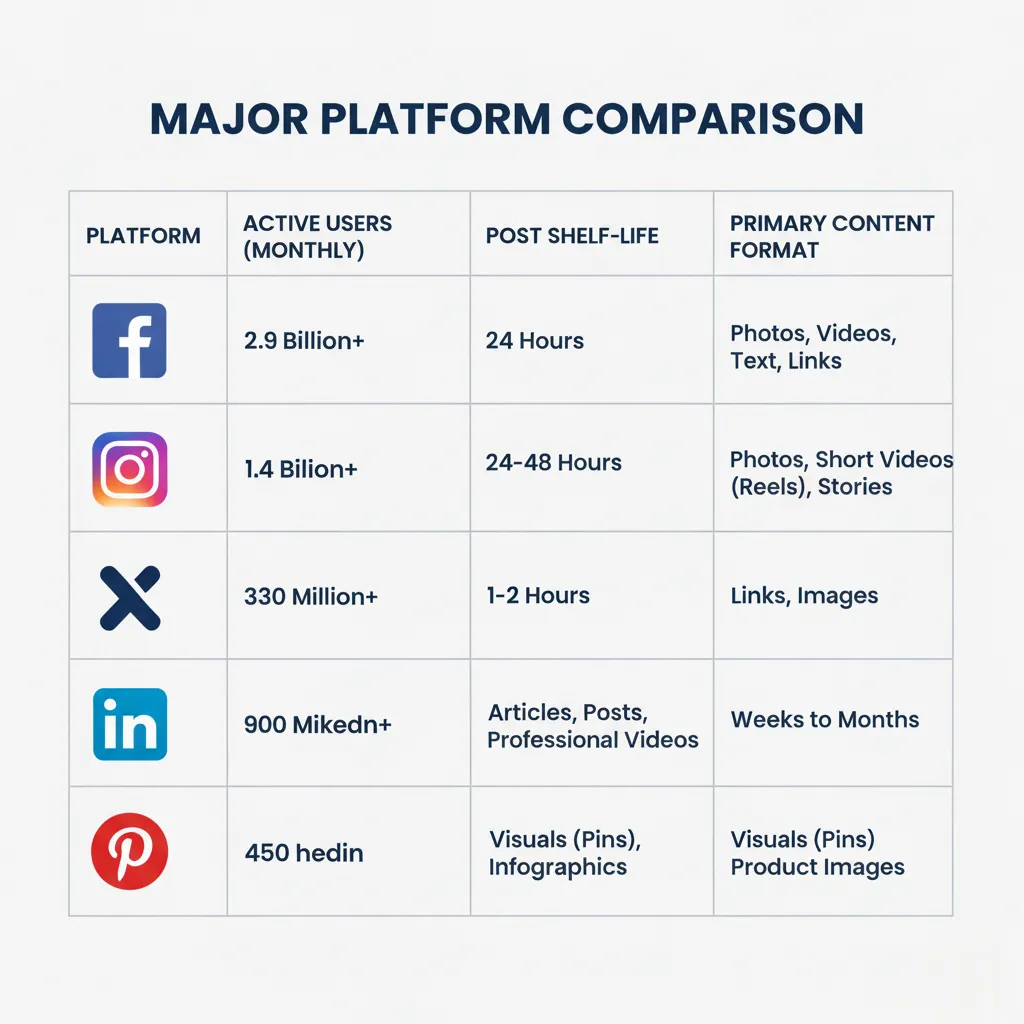
Platform Overview: Choosing Your Battlefield
You do not need to be everywhere. In fact, trying to be everywhere usually leads to burnout and mediocre results across the board. The key is to be exactly where your specific customers are. Let’s break down the “Big Five” and how to approach them.
Facebook: The Community Giant
Despite rumors of its decline, Facebook remains the largest social platform globally. It is the yellow pages of the modern era.
- The Vibe: Community-focused, news-heavy, and family-oriented.
- Best For: Local businesses, B2C brands, and building communities through Groups.
- Demographics: Skews slightly older (25-54), but reaches nearly everyone eventually.
- Winning Strategy: Facebook is “pay-to-play” for business pages due to low organic reach. However, Facebook Groups are goldmines for organic engagement. Start a group related to your niche (e.g., “Austin Homeowners Tips”) rather than just your brand.
Instagram: The Visual Storefront
Instagram is where brand aesthetics matter most. If your product or service is visually appealing (food, real estate, beauty, design, travel), this is your home base.
- The Vibe: Polished, aspirational, and high-energy.
- Best For: Visual brands, influencer marketing, behind-the-scenes content, and direct shopping.
- Demographics: Millennial and Gen Z heavy.
- Winning Strategy: Utilize the full suite. Use Stories for daily, raw updates to stay top-of-mind. Use Reels for reach (growth). Use Carousels (posts with multiple slides) for education and engagement.
TikTok: The Viral Engine
TikTok changed the rules of social media. It is not about how many followers you have; it is about how entertaining your content is right now. The algorithm gives every video a chance to go viral, regardless of the creator’s size.
- The Vibe: Authentic, raw, funny, and trend-driven.
- Best For: Brand awareness, reaching younger audiences, and showing brand personality.
- Demographics: Skews young (Gen Z), but older demographics (Gen X and Boomers) are the fastest-growing segment.
- Winning Strategy: Stop trying to sell. Start trying to entertain or educate. “Edutainment” works best here. Lo-fi, phone-shot videos often outperform high-production commercials.
LinkedIn: The Professional Network
If you are in B2B, LinkedIn is non-negotiable. It has transitioned from a stale resume site to a robust content platform where decision-makers spend their time.
- The Vibe: Professional, educational, and networking-focused.
- Best For: B2B lead generation, thought leadership, recruiting, and company culture.
- Demographics: Professionals, decision-makers, corporate executives.
- Winning Strategy: Personal profiles generally outperform Company Pages. Have your founder or key experts post industry insights. Use PDF carousels (documents) to share slide decks; these get high engagement.
YouTube: The Education Hub
YouTube is technically a search engine, the second largest in the world after Google. Content here has a long shelf life. A video you post today can generate leads three years from now, unlike a tweet that dies in 15 minutes.
- The Vibe: Informative, slow-paced, and thorough.
- Best For: Tutorials, in-depth reviews, educational content, and building deep authority.
- Demographics: Universal.
- Winning Strategy: Focus on SEO. Title your videos based on what people are actually searching for (e.g., “How to fix a leaky faucet” vs. “Plumbing Tips”).
Expert Tip
Start with one primary platform and one secondary platform. Master those before expanding. It is better to have a fabulous Instagram presence and no TikTok than to be mediocre on both.
Organic vs. Paid Social: The Hybrid Model
One of the hardest pills to swallow for modern marketers is the decline of organic reach. Years ago, if you had 1,000 followers, 500 of them might see your post. Today, data published by Hootsuite suggests that the average organic reach for a Facebook Page post is barely over 5%.
Does this mean organic is dead? No. It means its role has changed.
The Organic Role: Nurturing and Trust
Organic social media is for your existing community. It builds loyalty, establishes your voice, and serves as social proof. When someone clicks an ad, they will likely check your organic profile to see if you are a legitimate, active business. If your last post was in 2018, you lose the sale.
The Paid Role: Acquisition and Scale
Paid social (advertising) is for reaching people who don’t yet know you. It guarantees placement in the feed. It allows you to bypass the algorithm and demand attention.
The “Fire and Gasoline” Social Media Marketing Strategy
Think of organic content as the fire and paid ads as the gasoline.
- Test Organically: Post your content to your followers.
- Identify Winners: See which posts naturally get the most comments, shares, or saves.
- Add Gasoline: Put ad spend behind those specific posts to reach a broader audience (Lookalike Audiences).
This prevents you from wasting money on ads that might not resonate with your audience. You are paying to amplify what you already know works.
Content Strategy: The “Content Pillars” Framework
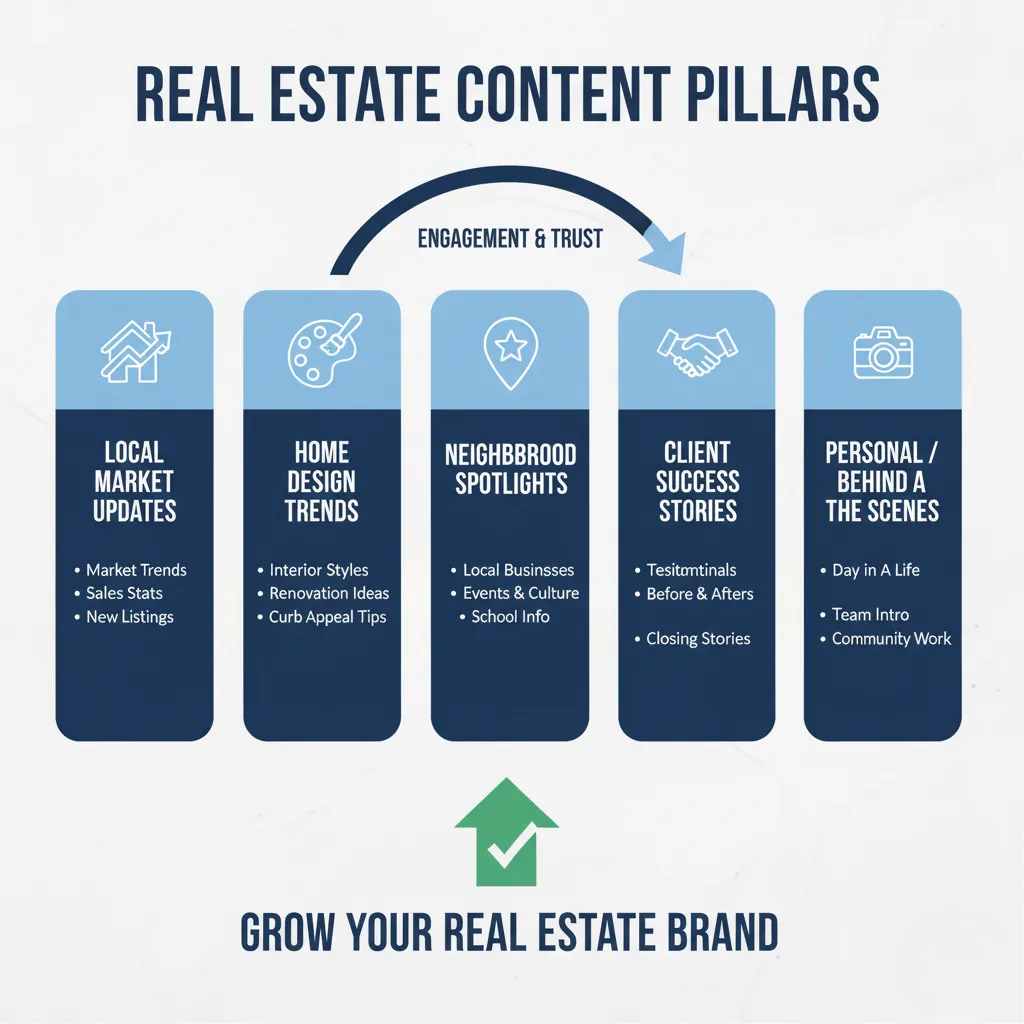
Random posting yields random results. If you wake up every morning wondering, “What should I post today?” you have already lost. To build authority, you need “Content Pillars.” These are 3-5 core topics your brand consistently discusses.
Developing Your Pillars
For a local real estate agent, pillars might be:
- Local Market Updates: Data on housing prices (Authority).
- Home Design Trends: Beautiful photos of interiors (Inspiration).
- Neighborhood Spotlights: Highlighting local coffee shops and parks (Community).
- Client Success Stories: Photos of families at closing (Social Proof).
- Personal/Behind the Scenes: The agent’s life, dog, or office culture (Trust).
By rotating through these, you ensure you never bore your audience, and you cover all bases of the marketing funnel.
The 80/20 Rule of Value
A common mistake is treating social media like a catalog. If every post is “Buy this,” “Book now,” or “New Inventory,” your audience will tune out.
- 80% Value: Educational, entertaining, or inspiring content. This gives the user something without asking for anything in return.
- 20% Promotion: Direct calls to action (sales, sign-ups, promotions).
Voice and Tone
Your visual identity (colors, logo) captures attention, but your voice keeps it. Are you funny and irreverent (like Wendy’s)? Are you authoritative and serious (like a law firm)? Are you calm and minimalist (like a meditation app)? Define this early. If multiple people manage your social accounts, create a “Brand Voice Guide” so posts written by an intern sound the same as those written by the CEO.
Engagement Strategies: Putting the “Social” Back in Social Media
Broadcasting is not enough. The algorithm tracks how much you interact with others, not just how much they interact with you. It rewards “Reciprocity.”
The 15-Minute Rule
When you post, stay online for the first 15-20 minutes. Reply to every comment immediately. This early activity signals to the algorithm that the post is sparking conversation, encouraging the platform to push it to more people.
Outbound Engagement (The $1.80 Strategy)
Do not just wait for people to come to you. Go to them.
- Find 10 hashtags relevant to your niche (e.g., #SeattleSmallBiz).
- Find the top 9 posts in each hashtag.
- Leave a genuine, thoughtful comment on each (not just an emoji). This puts your name in front of people who are already engaging with content similar to yours.
Turning Comments into Content
When a follower asks a great question in the comments, do not just answer it there. Take a screenshot of the question and use it as the background for your next Reel or TikTok, or create a text post answering it. This shows you listen and provides highly relevant content.
Social Media Advertising Basics
When organic reach hits a ceiling, paid ads break through. However, dumping money into the “Boost Post” button is rarely the most efficient use of funds. The “Boost” button is a simplified version of the ad platform designed to get engagement, not necessarily sales.
The Meta Pixel (and Why You Need It)
Before running ads on Facebook or Instagram, you must install the Meta Pixel on your website. This code tracks what users do after they click your ad.
- Did they view a product?
- Did they add it to the cart?
- Did they purchase? Without the pixel, you are flying blind. With it, you can “Retarget” people.
Retargeting: The Money Maker
Most people will not buy from you the first time they see an ad. Retargeting lets you show ads to people who visited your website but didn’t buy.
- Ad 1 (Cold Audience): Educational video about your product.
- Ad 2 (Retargeting Audience): Testimonial video shown only to people who watched Ad 1.
- Ad 3 (Bottom Funnel): Discount code shown only to people who added to cart but didn’t check out.
Targeting Capabilities
Social ad platforms have data that traditional media (TV, Radio) can only dream of.
- Demographic: Age, location, job title, income level.
- Interest-Based: People interested in “Physical fitness,” “SaaS,” or “Interior Design.”
- Lookalike Audiences: You upload your email list of current best customers. The algorithm analyzes them and identifies 100,000 new people with similar behaviors and traits.
Expert Tip
Your ad creative (the image/video) is responsible for 50-80% of your success. If the image stops the scroll, the copy (text) can do the selling. If the image is boring, the copy never gets read.
Influencer & User-Generated Content (UGC) Marketing
People trust people more than they trust brands. A Nielsen study highlights that recommendations from acquaintances and consumer opinions posted online are the most trusted forms of advertising, far outpacing official brand messaging.
The Rise of Micro-Influencers
You do not need Kim Kardashian. In fact, huge celebrities often have low engagement rates.
- Mega-Influencers (1M+ followers): Massive reach, low trust, expensive.
- Macro-Influencers (100k-1M): Professional creators, high polish.
- Micro-Influencers (10k-50k): High trust, niche audiences, reasonable cost.
- Nano-Influencers (1k-10k): Highest engagement, very local, often work for product exchange.
For a local business, a partnership with five local Nano-influencers is often more effective than one expensive ad.
User-Generated Content (UGC)
UGC is any content, text, videos, images, or reviews created by people, rather than brands.
- Strategy: Encourage customers to post their purchases. Create a branded hashtag (e.g., #MyGeniusMarketing).
- The Benefit: When you reshare their photo (with permission), it acts as a third-party endorsement. It tells your audience, “Real people use this and love it.”
- In Ads: Ads that look like UGC (shot on an iPhone, unpolished) often outperform studio-quality ads because they look native to the feed. They don’t look like commercials.
Community Building: Groups vs. Pages
There is a distinct difference between an audience and a community. An audience listens to you; a community talks to each other.
A Facebook Page or LinkedIn Company Page is like your front lawn; it is public, manicured, and you shout messages to passersby. A Group is like your living room: private, intimate, and where the real conversation happens.
Why Groups Matter
Algorithms heavily favor Groups because they keep users on the app longer. If you can build a thriving community, you “own” your members’ attention in a way pages cannot.
- Strategy: Start a Group around a topic, not your brand.
- Example: Instead of “Genius Marketing Clients,” we might run “Small Business Growth Tactics for Washington Owners.”
- The Payoff: You lead the group, you provide value, and naturally, you become the authority figure they hire when they are ready. You are the host of the party.
Posting Frequency & Scheduling
“How often should I post?” is the most common question in the industry; the honest answer: As often as you can consistently maintain quality. Inconsistency kills growth.
Ideal Targets (Benchmarks for Growth):
- TikTok: 1-3 times daily (High volume is needed to catch a trend).
- Instagram: 3-5 Feed posts weekly + Daily Stories.
- LinkedIn: 2-4 times weekly.
- Facebook: 3-5 times weekly.
- YouTube: 1 video weekly.
The Power of Batching
Do not wake up every morning in a panic. Adopt a “Batching” workflow.
- Monday: Brainstorming and Scripting.
- Tuesday: Filming/Creation (Shoot five videos in 1 hour; just change your shirt!).
- Wednesday: Editing and Captioning.
- Thursday: Scheduling.
Use scheduling tools to upload everything at once. This frees up your daily time for engagement (replying to comments) rather than creating stress.
Social Proof Building
Your social profiles are a vetting tool. When a potential client hears about you via word-of-mouth or Google, they look you up on Instagram or LinkedIn. If your last post was from 2019 or you have 3 followers, they may subconsciously assume you are out of business, unpopular, or disorganized.
Elements of Social Proof to Optimize:
- Follower Count: While mostly vanity, a healthy number implies authority.
- Verification: The blue check (now often paid, but still signals legitimacy).
- Pinned Posts: Pin your best three posts to the top of your profile. One should be an “About Us,” one a “Best Case Study,” and one a “Current Offer.”
- Highlights: On Instagram, use Story Highlights to save your best content (Reviews, Services, FAQ) so it lives forever.
Social Media Analytics: What Matters?
It is easy to get distracted by “Vanity Metrics” (Likes and Followers). While these look good to the ego, they do not pay the bills. You need to focus on metrics that indicate business health.
The Hierarchy of Metrics
- Awareness Metrics (Reach & Impressions): How many eyes saw the content? Good for top-of-funnel health.
- Engagement Metrics (Engagement Rate): (Likes + Comments + Shares) / Total Followers. This shows if your content is actually interesting. A high follower count with low engagement is a red flag.
- Conversion Metrics (CTR & ROI):
- Click-Through Rate (CTR): How many people clicked the link in your bio?
- Cost Per Lead (CPL): If running ads, how much did it cost to get one email address?
Using UTM Parameters
To track social traffic accurately in Google Analytics, use UTM parameters. These are tags added to the end of your URL.
- Instead of yourwebsite.com, you use yourwebsite.com?utm_source=facebook&utm_medium=social&utm_campaign=summer_sale.
- This tells your analytics software exactly where the visitor came from, allowing you to prove that the sale came from your Facebook post, not just “direct traffic.”
Tools for SMM
You cannot build a house without a hammer. You cannot make a modern social presence without the right tech stack.
Scheduling and Management
- Buffer / Hootsuite / Later: Great for visually planning posts across multiple platforms.
- Meta Business Suite: Free and essential for scheduling Facebook and Instagram posts, plus managing your inbox.
Content Creation & Design
- Canva: The industry standard for non-designers to create professional graphics.
- CapCut: Excellent mobile editing for TikToks and Reels. It offers templates that help you jump on trends quickly.
- Adobe Express: A robust alternative to Canva with powerful Adobe fonts and stock images.
Analytics & Listening
- Sprout Social: Advanced listening and reporting (enterprise level). It can tell you the sentiment (positive/negative) of your brand.
- Google Analytics 4: To track how much traffic social media sends to your website and what they do when they get there.
AI Assistants
- ChatGPT / Claude: Excellent for brainstorming captions, script ideas, and repurposing text. (e.g., “Turn this blog post into 5 tweets”).
- Midjourney / DALL-E: For creating unique, generated imagery when stock photos won’t cut it.

Content Repurposing: Work Smarter
The most significant cause of burnout is trying to create unique content for every single platform. Stop doing that. Instead, use the Waterfall Method.
The Waterfall Workflow:
- The Source: Record a 20-minute YouTube video or a Podcast interview. This is your “Pillar Content.”
- The Splinter (Video): Cut 3-4 short vertical clips (Reels/TikToks) from that video.
- The Text: Transcribe the video to create a blog post.
- The Graphic: Turn a key quote from the video into a quote graphic for Instagram.
- The Discussion: Post a text summary or a poll about the topic on LinkedIn / Twitter.
- The Email: Send the blog post to your newsletter list.
One core piece of effort becomes 10+ pieces of content distributed across the web. This makes you look omnipresent while only doing the work once.
Local SEO & Social Integration
For local businesses (restaurants, plumbers, law firms), social media and Local SEO are best friends.
- Geo-Tagging: Always tag your specific location (city or neighborhood) in posts. This helps people searching for content in that area find you.
- Google Business Profile: While not a “social network” in the traditional sense, you can post updates here. Treat it like a social feed. Post your offers and photos.
- NAP Consistency: Ensure your Name, Address, and Phone number on your social profiles match exactly with your website. This helps Google verify your business’s legitimacy.
Crisis Management: When Things Go Wrong
Social media moves fast. If your brand makes a mistake, the backlash can be instant. You need a plan before you need it.
- Listen First: If damaging sentiment spikes, do not ignore it. Understand precisely what people are upset about.
- Take Ownership: If a crisis occurs, apologize quickly and sincerely. Avoid “non-apologies” (e.g., “I’m sorry you felt that way”).
- Move to Private Channels: If a specific customer is angry, try to move the conversation to DM or email. “We want to fix this. Please DM us your order number.”
- Pause Scheduled Posts: If a crisis is happening, pause your pre-scheduled “Happy Monday!” posts. They will appear tone-deaf and make the situation worse.
Key Takeaways
- Consistency beats intensity. It is better to post 3 times a week for a year than 3 times a day for a week and then quit.
- Engagement is a two-way street. You must give attention to get attention.
- Video is king. Short-form vertical video is currently the most significant opportunity for organic reach across all platforms.
- Pay to play. Use ads to amplify what is already working organically, not to fix what is broken.
- Own your audience. Use social media to grow your email list. You rent your social followers; you own your email list.
Putting Your Social Media Strategy into Action
The brands that succeed on social media are the ones that show up consistently, provide real value, and adapt based on the data. With so many platforms, features, and trends, it’s easy to feel overwhelmed, but you don’t need to master everything at once.
Start With a Clear Plan
Before diving in, take a step back and assess where your business currently stands on social media. Consider the following:
- Audit your current accounts – Which platforms are active? What’s working, and what isn’t?
- Define your content pillars – Focus on 3–5 main topics that reflect your brand and appeal to your audience.
- Set a realistic posting schedule – Even posting twice a week consistently is better than sporadic updates.
Remember, every major brand you admire started with zero followers. The only difference between them and a stagnant account is consistent execution.
Commit to Consistency and Engagement
Once you have a plan:
- Stick to your content calendar and post regularly.
- Engage with your audience by responding to comments, messages, and mentions.
- Track performance metrics to understand what resonates and adjust accordingly.
Turn Your Social Media Into a Business Asset
Use this guide as a roadmap. By building your calendar, delivering valuable content, and nurturing your community, your social media presence can grow from a quiet page into a powerful tool for your business. Over time, consistent effort transforms casual followers into loyal customers and meaningful revenue.
Need Expert Guidance?
Building a strong, comprehensive social media strategy takes time, and putting it into action takes even more effort. If you’re ready to grow your business faster but need support managing the day-to-day work, we’re here to help.
At Genius Marketing, we focus on turning likes into leads and followers into real revenue. We handle everything from strategy and content creation to community management, so you can concentrate on running your business while we make sure your social media works for you.
Contact us today to discuss your strategy:
- Phone: (360) 519-5100
- Email: [email protected]
Frequently Asked Questions About Social Media Marketing
How do I handle negative comments?
Do not delete them unless they are offensive, hate speech, or spam. Respond professionally and publicly. “I’m sorry you had that experience. Please DM us so we can fix it.” This shows other customers that you care about service. Deleting criticism often makes you look like you have something to hide, and savvy users will notice.
Is B2B marketing a waste of time on Facebook?
No. Decision-makers are people, too. They browse Facebook in the evening to see photos of their grandkids or friends. While LinkedIn is great for direct professional context, Facebook retargeting ads are incredibly effective for keeping your B2B brand top-of-mind after they visit your website. You catch them in their downtime.
Do I really need social media for my business?
Yes. Most local customers check online before visiting a store or booking a service. Social media helps them find you, see what you offer, and get a sense of your brand.
Which platform should I focus on?
Focus on where your customers are. Facebook and Instagram work well for most local businesses, TikTok can reach younger audiences, and LinkedIn is best for professional services.
Which metrics actually matter for my business?
Focus on metrics that show real results, like engagement, website clicks, inquiries, and bookings. Likes and follower counts are nice, but the goal is attracting customers and growing your business.
Sources
- Sprout Social – Comprehensive statistics on consumer behavior, response time expectations, and social media usage trends.
- Hootsuite – Data analysis and reports regarding the decline of organic reach on social media marketing strategies to counter it.
- Nielsen – Global trust report detailing how consumers view different forms of advertising and the importance of peer recommendations.
- HubSpot – Insights into the “State of Marketing,” video trends, and ROI benchmarks.
- Pew Research Center – Demographics data regarding who uses which social platforms and how often.